 Fale com um especialista do frio
Sumário
I was poking around a weird wallet the other day and got curious. It felt oddly satisfying to trace a token hop from one obscure account to a trading pool. Initially I thought the data would be messy, but then I realized explorers like this suddenly make everything clearer when you know where to look. My instinct said: there’s a story in on-chain traces, you just need the right map. Wow!
Explorers are maps for blockchains, plain and simple. They let you see transactions, programs, and token flows with clear timestamps and fees. On Solana that’s especially useful because things happen fast and often concurrently, which can be confusing if you only watch wallets in isolation. The UI frequently matters as much as the raw data, though actually the API and filters under the hood are what let power users slice and dice results. Really?
Here’s the thing. When a token transfer looks suspicious, a token tracker can reveal its provenance, associated programs, and whether the token is an SPL standard or some forked mess. I once followed a token that had been wrapped and unwrapped across three programs, ending up in a treasury that looked empty but wasn’t — that bit took some digging. Initially I thought the final account was a dead end, but then realized the metadata had been indexed under an alternate mint address. That discovery saved me from calling it a rug until I double-checked the mint history. Whoa!
Solana explorers vary widely in what they prioritize. Some emphasize transaction logs and program traces. Others focus on token metadata and verified collections. If you’re doing audits or building tooling, you want both perspectives — the surface-level UI and the deep indexing APIs. Hmm…
Let me be honest about biases here. I’m biased toward explorers that show program logs and parsed instructions alongside raw transaction data. Those views help you understand mints, freezes, and authority changes without guessing. I’ve used many explorers and kept a mental short-list of features I won’t compromise on. Here’s a quick checklist: clear token trackers, good search, verified labels, and solid APIs. Seriously?
Token trackers are underrated tools. They do far more than list balances. A good tracker links token mints to metadata, shows holders distribution, and helps you spot concentrated ownership or stealth transfers to new accounts. If you want to follow an airdrop or verify liquidity pool tokens, these views are indispensable. The danger is trusting labels blindly — sometimes a “verified” collection tag can lag or be incomplete. Wow!
I want to talk about one practical story that stuck with me. I was troubleshooting an apparently failed swap that kept timing out on a DEX. At first glance the transaction failed due to compute limits, and I was ready to blame the user interface or the RPC node. Initially I thought the issue was the DEX, but digging into the program logs showed a preceding instruction that changed an account owner, which cascaded into a permission error. Tracking that owner change via the token tracker and program trace let me propose a fix to the dev team, and they patched the permission flow within 24 hours. Whoa!
That patch felt good. It also highlighted something important: on-chain data doesn’t lie, but it takes context to read it correctly. You need to correlate instructions, account state, and metadata. Without that, you might miss that a seemingly failed transfer was actually an administrative hold, or that liquidity withdrawals were being routed through wrapped mints. My instinct kept nudging me to check the raw logs, and that saved time. Hmm…
Practically speaking, here’s how I use explorers for token research. Step one: look up the mint address. That reveals total supply and decimals, which matters deeply for interpreting balances shown elsewhere. Step two: view holder distribution to see if a few addresses control most of the supply. Step three: inspect recent transfers and parsed instructions to understand how tokens move between programs and accounts. Step four: use the explorer’s label system to spot verified marketplaces and bridges. These steps are simple but powerful when diagnosing token issues. Really?
A few features matter more than others. Search speed and fuzzy matching save time when the mint string is long and ugly. Program log parsing is crucial for debugging failed transactions and seeing inner instructions. A token tracker with an API lets you fetch holder snapshots for off-chain analytics, which is essential for audits and dashboards. And finally, a clear indication of whether a token has verified metadata avoids costly misreads. Wow!
One thing bugs me though. Many explorers show token holders but don’t make it easy to export the data in a form you can use for governance snapshots or airdrop lists. That’s a real friction point for teams doing on-chain coordination. I wish more explorers offered CSV exports or direct integrations with snapshot tools. I’m not 100% sure why this is still so patchy, but my guess is tools assume developers will build the integrations themselves. Hmm…
For developers building on Solana, the API quality is a serious differentiator. Endpoints that return parsed instructions, token metadata, and holder snapshots cut integration time dramatically. Low-latency websockets for subscription updates also matter when monitoring mempool-like events or pending confirmations. On the other hand, a slick UI helps non-developers, so the best explorers balance both. Initially I thought UI alone would win, but then realized data access wins for long-term tooling. Whoa!
There’s also the security angle. A trustworthy explorer marks known malicious addresses, phishing sites, and flagged mints. That doesn’t stop every scam, but it raises the bar and reduces accidental interaction with dangerous contracts. Community moderation and verified labels are part of that trust model, and they evolve with time as more incidents are reported. Be skeptical, though — labels can lag behind new scams. Really?
Now, a practical tip for tracking tokens: save queries and watchlists. If you’re monitoring an airdrop, create a watchlist of mint addresses and follow their holder changes daily. Some explorers offer portfolio snapshots tied to wallet addresses, which helps track liquidity positions and token vesting schedules over time. If you’re a researcher, you can combine snapshots with an API to analyze accumulation or dumping patterns programmatically. That mix of UI convenience and API access is where I spend most of my time. Wow!
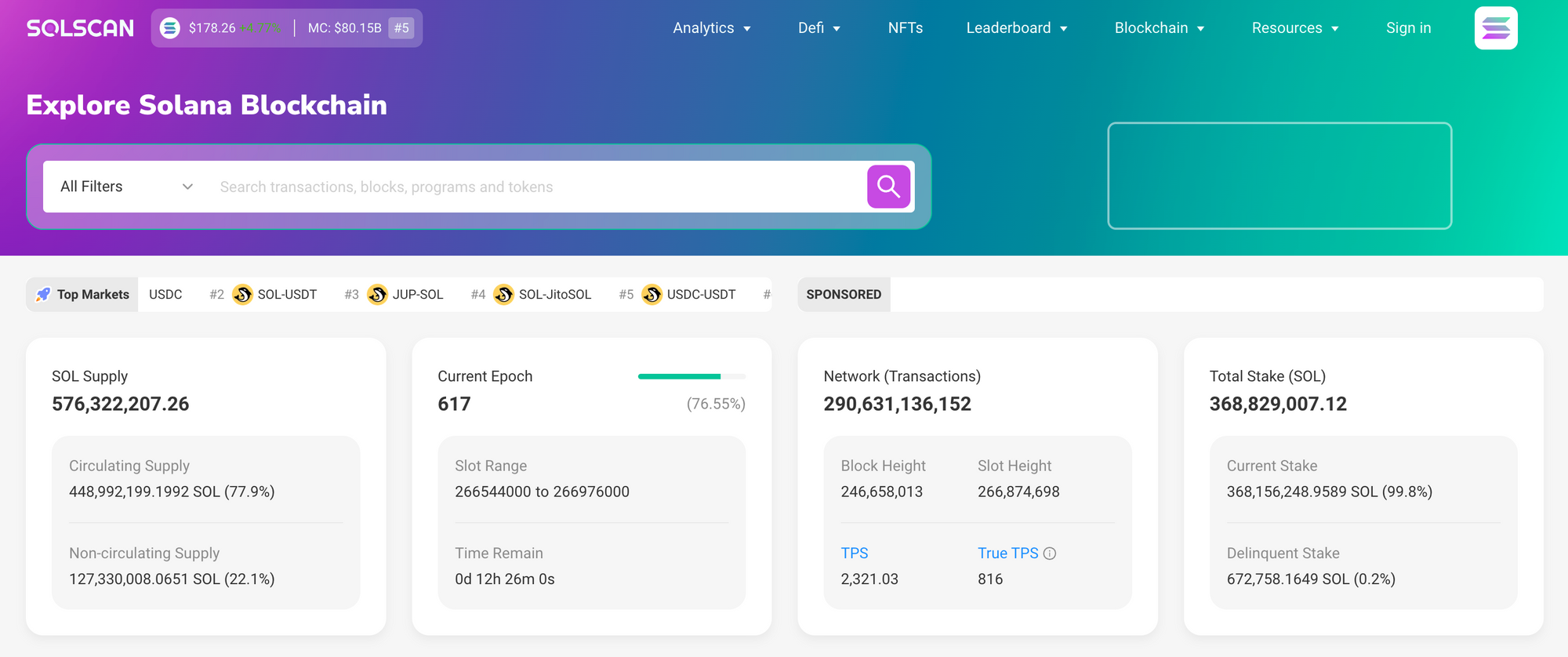
Okay, so where do I land on recommendations? If you want a balance of clean UI, deep logs, and token tracker capabilities, check out solscan for quick lookups and developer-friendly views. solscan is one of the tools I use often for parsing instructions and for its token tracking pages. I’m biased, but its blend of labeled metadata and robust parsed logs makes it a go-to when I’m troubleshooting a complex flow. Seriously?
Deeper Practices for Power Users
If you want to level up, learn to correlate program IDs with documented programs. Many on-chain behaviors trace back to particular programs, and knowing them helps you interpret transactions faster. Use token tracker snapshots to detect wash trades, layering, or strange mint burns. Combine on-chain analytics with off-chain context like GitHub commits and dev notes when possible. Hmm…
Automation is your friend here. Scripts that poll holder counts and flag sudden large transfers can catch whales moving positions. Set thresholds for alerts so you aren’t drowning in noise. Also, keep an eye on confirmed and finalized blocks; sometimes mempool reorgs can temporarily mislead you about token movements. My instinct is to double-check significant transfers before acting on them, because false positives happen. Really?
It’s easy to fall into confirmation bias when you want a token to pump or tank. I do it too. I once convinced myself a token would moon because holder growth looked strong, only to see the large holders were contracts managing vesting schedules rather than active traders. Initially I thought the numbers meant hype, but then realized vesting explained the concentration. That humility helped me avoid a bad trade. Whoa!
FAQ
How do I verify a token’s authenticity?
Start with the mint address and check metadata and verified labels. Look for social proof like project links and cross-check on-chain activity for normal usage patterns. If it’s newly minted with few holders, be extra cautious. Also watch for copied metadata pointing to suspicious IPFS content.
Can token trackers show holder history over time?
Yes, many trackers provide snapshots or historical holder charts. Use the API if you need frequent snapshots for time-series analysis. Exports to CSV are sometimes available, though not always — you may need to script the snapshots yourself.
What’s the fastest way to debug a failing transaction?
Check parsed instructions and program logs first, then follow inner instruction traces to see which instruction reverted or returned an error. Correlate account owner changes and rent-exempt issues, and confirm the mint and token accounts match expected addresses. If you still can’t find the issue, review recent commits or open issues for the related on-chain program.